Like bats out of hell
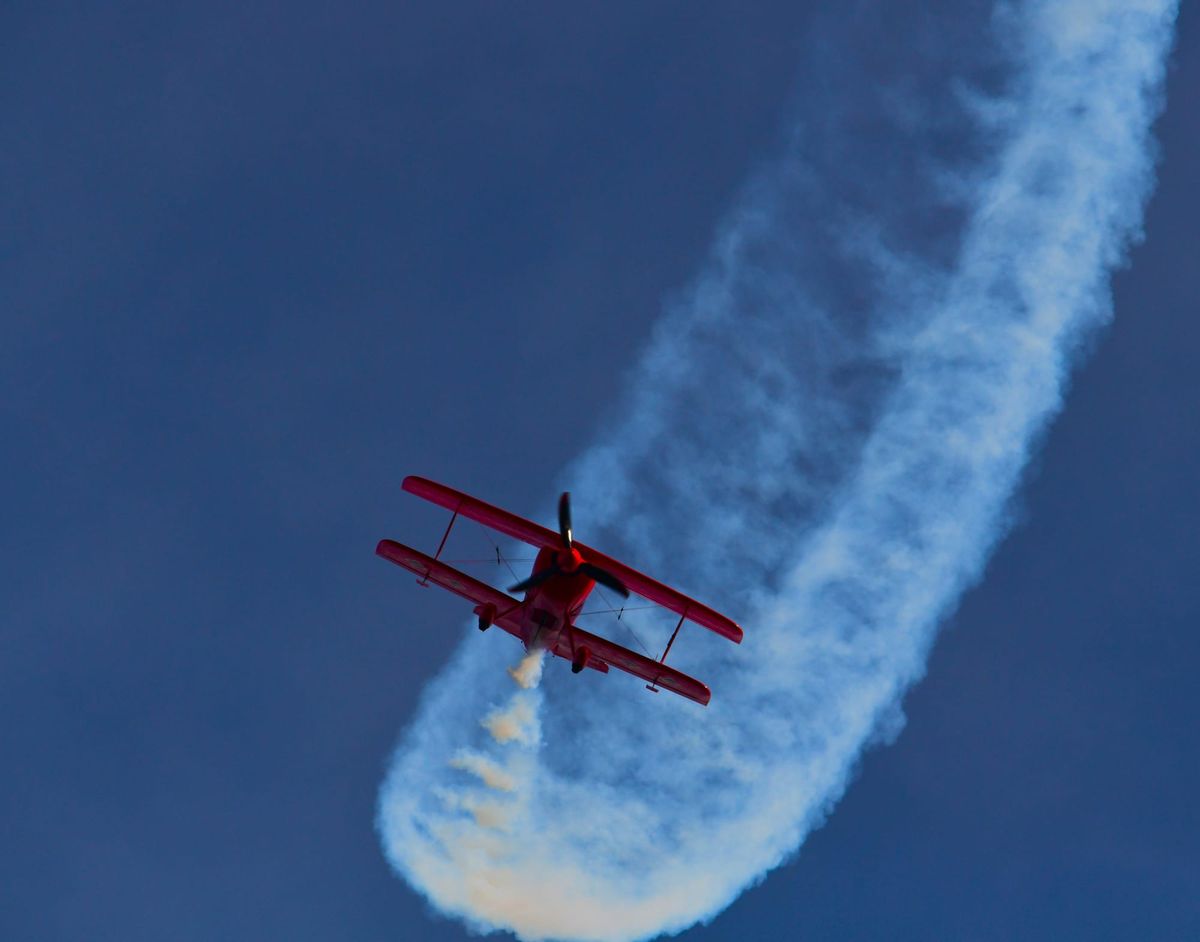
It’s a huge stage for such little machines but when Adrian van der Sluys and his Screaming Diamonds team-mates launch their Pitt Specials into the sky above the Gold Coast in two weeks all hell will break loose.
In the Pacific Airshow the sky might be the limit but for Moama’s Adrian and Michael Jones, and teammate Lyndon Trethewey from Goolwa in South Australia, it will be their platform to defy gravity – and occasionally belief.
What is almost equally unbelievable is Adrian built his current plane himself – and it took seven years and around 4000 hours to complete.
But this was no simple flatpack project where, when you finish, there always seems to be a couple of nuts and bolts left over. His plane was put under the Civil Aviation Safety Authority microscope before taking off and still undergoes an annual accreditation.
Not that Adrian is worried, he’s been flying Pitts for more than 15 years, his plane gets a full check-over before and after every flight and he spends hours more every year on its routine maintenance.
“The Pacific Airshow is as big as it gets – it’s the largest in Australia and hundreds of thousands of people will pack the beach for the three days it runs,” Adrian says.
“Right now we are flat out working out routines for the show and depending on the weather – and our constant fog – we are trying to get up at least three times a week,” he says.
“We are also joined by Jackson Strong (his Pitt is black) from Lockhart in the Riverina for some routines so if we are not flying here, we shoot up to Wagga with him, or across to Swan Hill to meet Lyndon.”
Adrian says the Screaming Diamonds show includes loops, barrel rolls, tight V formations, weaving dives and bomb blasts when they soar skyward before peeling off in different directions.
At times they are flying around 2000 feet and at others come hurtling just above the waves off the beach, with about 20 feet between their wheels and the water – where there’s no margin for error or big waves.
Often with coloured smoke flaring out behind them.
Adrian says they are so aware of flying conditions, they will arrive early in the Gold Coast to familiarise themselves with the warmer, more humid conditions just to finetune their performance.
He calls the show a ‘three ship’ performance with the two red and one yellow (that’s Lyndon’s) Pitts slicing through the skies.
“We like to put on the show, it is a lot of fun but also a lot of concentration and years of practice,” Adrian explains.
“One of the things we have this year will be a combination between two of our planes and some sky divers in wing suits (aka squirrel suits) who will be plummeting earthwards with us going in and around them,” he says.
“As weird as it sounds, we actually have to throttle back because they are falling much slower than we are flying so we have to adjust for that.”
While the crowds will get a kick out of the show, for Adrian and his teammates, the payoff is a perfect performance which, he admits, you never really get.
From the ground it would be all but impossible to pick a problem – but the pilots will know.
Even worse, other pilots watching will know as well.
“There’s always room for improvement and if we do have a little hiccup at high speed, you might not notice but trust me, our friends will and they will certainly let us know,” Adrian grins.
“”We have done the Pacific Airshow twice – the third booking was blown away with a cyclone – so we are looking forward to being there again, alongside some of the heavy duty numbers such as the F35 Lightning and F/A18 Hornet and the Roulettes,” he says.
While Adrian’s Pitt isn’t going supersonic anytime soon, like the big fighters, considering his plane weighs barely 400kg and is powered by a Lycoming IO 540 six-cylinder engine it averages out around 1kg per horsepower, so comes with plenty of grunt contributing to the screaming part of the team name.
With around 3000 flying hours under his belt Adrian knows his way around planes, knows in some routines his Pitt is going to pull negative and positive G forces with a top speed around 200 knots (or 370km/h), so there is as much planning as practice in every performance.
“We try and mix it up, but we need to know what works and what’s safe – perfection might be impossible, but there’s no harm in trying.”