The Kokoda proves an ‘incredible’ confrontation
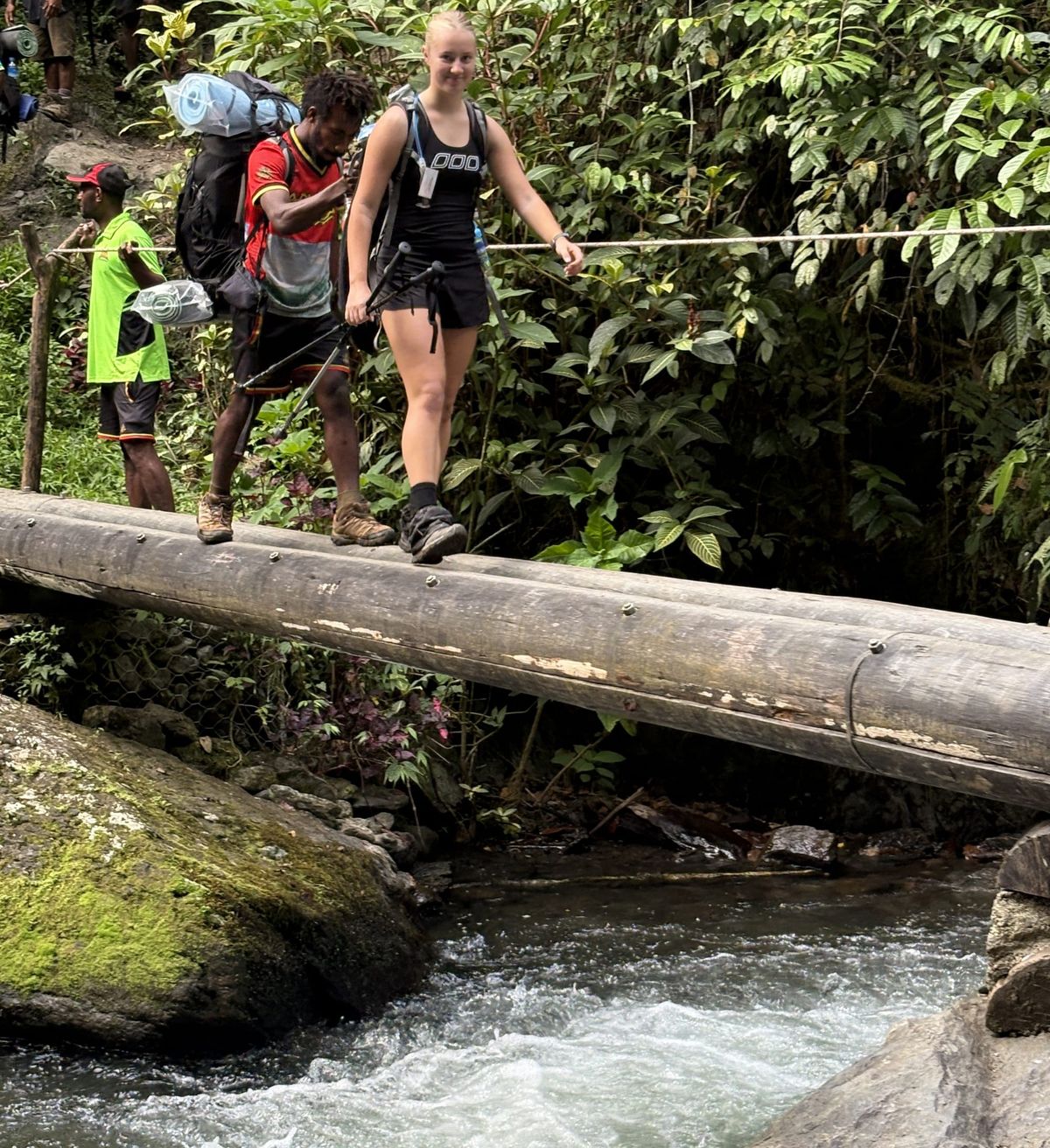
Hannah Finn travelled to Papua New Guinea in the school holidays with four other Year 11 students from the Murray Plains electorate of Nationals MP Peter Walsh. They each received a Colin Sinclair Kokoda Scholarship, to walk the historic Trail where they were immersed in the history of Australia’s campaign there in World War II. The stories of the other students will appear in the next few weeks.
Hannah Finn has been home from the Kokoda for a week and is still trying to convince herself it all happened.
The 16-year-old St Joseph’s College student says she went to Papua New Guinea as a Colin Sinclair Kokoda Scholar, expecting to learn things, things about the soldiers who fought and died there all those years ago, about the history, about the country – and about herself.
What she could never have realised was coming was the unexpected – the things which still bring a tear to her eyes, the number of new friendships she forged in just a few days and the memories she will carry for the rest of her life.
“I wanted to put myself out there as a person, to challenge myself in something I knew would be hard, to see if I could really get just a small sense of what our soldiers would have gone through, to meet new people, form new connections,” Hannah says.
“And I got all that, and so much more, I can’t believe how many friends I made, how we could also become so close so soon, and we have all been chatting every day since we got back and are already working out how we can have our first catch up because we are spread from Mildura to Gippsland,” she says.
At 16 Hannah might be a little young to fully comprehend what she just described but she meant mateship, a sense of camaraderie forged in adversity, doing things together, helping each other, looking out for mates having a down day.
The other friend Hannah made, but never expected to bring home, is Stan Snow.
An acting corporal who had migrated from England to Rochester in 1911, Stan was 28 when he enlisted with the Australian Army, serving in Palestine and the Middle East before heading to New Guinea.
Stan didn’t get far from there. While his battalion was waiting to fly to Nadzab from Jackson Airfield, a US B-24 Liberator with a full bomb and fuel load crashed into their trucks, killing 60 and injuring a further 92, including Stan.
He sustained severe burns to the face, neck, arms and hands and never recovered, dying four days later at the age of 32.
Each student trekker is given a student to represent, to walk for, and to talk about at sites along the Trail.
“I had seen so many pictures of Bomana War Cemetery, from my research and from friends who had been, but when you really see it, well it’s overwhelming, so many crosses, so many graves,” Hannah says.
“And so many of those crosses don’t even have names, they just remember an ‘unknown soldier’,” she says.
“The thing I never understood before I got there was the number of graves for the Fuzzy Wuzzy Angels, it wasn’t even their war, really. They got invaded and they did so much for our men and got so little recognition, it’s very sad.
“I sat at Stan’s grave, and talked to him, told him what we had done, and it was incredible to be able to do that; but what I also couldn’t help thinking was that if he hadn’t been killed in a war we might once have been able to meet, and I could have had a conversation with him, rather than talking to him and his headstone.”
Hannah says she was also stunned when she discovered there were buried soldiers who had been her age, and younger. One isn’t even buried under his own name; he stole his brother’s identity to enlist early.
Bomana was a confronting experience for the teenager, and the sheer scale of the mountains in the Owen Stanley Ranges was another.
She says she could never have comprehended just how vertical they were, and that she still managed to get up and down them, day after day.
There are days there where you tackle the very aptly named Wall, and Brigade Hill is another climb with a sting in it. And Hannah tackled both while dealing with a mild bout of gastro.
“I sort of zombied all the way through both, I was ill, but we had committed to the walk and we had to keep going, and in the end I got better so it could have been worse,” Hannah explains.
“Reaching camp each day gives you an amazing sense of accomplishment, you can look at the map and you’ve come a long way, and on others, you are going straight up and down, you seem to walk as long but don’t go anywhere near as far as in a straight line,” she says.
“But when we reached Hoi on our last night, you can look back and see where you’ve been, how far you’ve walked and really feel you have done something.
“Something which you might not have done without your porter, they were incredible. My porter was called Junior, and he did so much for me.
“And at the end, your porter makes you a memory stick. Mine has Junior’s name and mine and Kokoda 2026 but then he carved some amazing totemic designs into it as well – I just love it.”
But when Hannah looks back on her “amazing” trip, there is one memory she can’t quite shake off.
“All the way along the trail I kept thinking I never saw anyone with grey hair, and then discovered life expectancy for men in the highlands is barely 50, yet the people seemed so happy with so little.”
It was another lesson – even confrontation – in life between the world in which she lives and the world in which she was a visitor.